
As the demand for efficient, eco-friendly cleaning solutions grows, commercial cleaning businesses are relying heavily on industrial floor scrubbers. These machines are essential for large-scale cleaning operations in spaces like warehouses, shopping malls, hospitals, and airports. However, one critical issue continues to plague many floor cleaning machines: short battery life.
Lithium-ion batteries have become the standard for powering floor scrubbers due to their efficiency, rechargeability, and environmental benefits. But despite these advantages, many businesses still face challenges with battery life, leading to frequent downtime and increased operational costs. In this blog, we will explore the common problems associated with floor scrubber lithium batteries and offer solutions to improve performance and extend battery life.
Main Problems:
1. Short Battery Runtime:
One of the primary concerns with lithium-ion batteries in floor scrubbers is their short runtime. Many standard lithium-ion batteries are designed to provide only a few hours of continuous operation before they require a recharge. This limitation can be particularly problematic in large-scale facilities or high-traffic areas, such as shopping malls, warehouses, or airports, where consistent cleaning is necessary throughout the day.
When a floor scrubber is in constant use, operators are often forced to stop their cleaning tasks and wait for the battery to recharge, leading to frequent interruptions. In industries where time is money, this downtime can severely impact overall productivity. In extreme cases, cleaning tasks can be left unfinished, leading to the potential for unsanitary conditions or decreased customer satisfaction. A short battery runtime directly limits the effectiveness of floor scrubbers, leaving them unable to meet the demanding operational requirements of large spaces or continuous cleaning tasks.
2. High Charging Frequency:
As a result of short battery life, the need for frequent recharging becomes inevitable. Each time a floor scrubber runs out of charge, it must be plugged into a power source, sometimes for several hours, before it’s ready to continue working. This continuous cycle of charging and discharging wastes valuable time that could otherwise be spent on cleaning.
Moreover, the more frequently batteries are recharged, the more likely it is that they will experience wear and tear, especially if they are recharged before fully discharging. This charging frequency problem creates inefficiencies and increases operational costs. Employees may be left waiting, unable to continue their tasks, which is particularly frustrating in large-scale operations where cleaning needs to be done quickly and without interruptions. To avoid these delays, businesses require batteries that can support longer cleaning periods on a single charge.
3. Battery Degradation:
Over time, all batteries experience capacity degradation — that is, they gradually lose their ability to hold a charge. Lithium-ion batteries are no exception, and as they go through multiple charge cycles, their performance deteriorates. This process is exacerbated by poor maintenance practices, such as overcharging, undercharging, or using the battery in extreme temperatures, all of which can speed up degradation.
As a result, businesses may find themselves facing more frequent replacements as their batteries lose efficiency and their runtime shortens. This is not just a minor inconvenience; battery degradation can significantly reduce the operational lifespan of a floor scrubber, leading to more repairs, downtime, and eventual replacement costs. In many cases, businesses might end up spending more money replacing degraded batteries than they initially saved with lower-cost, lower-quality batteries.
Improper maintenance can also play a role in accelerating battery degradation. For instance, not using the correct charging equipment or failing to regularly monitor battery health can contribute to the battery’s inability to deliver its full capacity. Without proper monitoring or smart charging systems, businesses may be unaware that their battery is starting to degrade, resulting in unexpected failures and unplanned downtime.
4. Increased Operating Costs:
Frequent battery replacements, coupled with the need for high maintenance, directly translate into higher operating costs for businesses. Standard lithium-ion batteries, particularly those with lower capacities, may need to be replaced every few years or even more often depending on usage. These replacement costs quickly add up over time, turning what initially seemed like a low-cost investment into a significant ongoing expense.
On top of this, the cost of frequent downtime, during which cleaning cannot occur, adds to the overall operating expenses. Cleaning staff may need to wait for batteries to recharge or, in the worst case, the entire machine may need to be sent in for repairs or battery replacement. Both scenarios reduce the time available for productive cleaning, leading to inefficiencies and increased labor costs.
Additionally, operating floor scrubbers with degraded batteries or low-quality batteries that require constant charging can result in increased energy consumption. Charging the battery more frequently over time not only drains resources but can also incur higher electricity costs, contributing further to the growing operational expenses.
Ultimately, businesses might find that their savings from initial low-cost battery purchases are wiped out by these hidden costs, leaving them with a poor return on investment. The combination of expensive battery replacements, higher energy consumption, and downtime adds significant pressure to profit margins, especially in industries where operational efficiency is key.
Solutions:
To address these challenges, the solution lies in upgrading to higher-capacity lithium-ion batteries. A high-capacity lithium battery, such as the PROPOW CPC36560 36V 560Ah LiFePO4 battery, can drastically increase the runtime of your floor scrubbers. By providing extended power, these batteries reduce the frequency of recharges, allowing for longer cleaning cycles and fewer interruptions. This results in more productive cleaning sessions and minimizes downtime, especially in large-scale facilities.
Moreover, improving battery efficiency involves more than just increasing capacity. Smart charging technologies play a critical role in optimizing the performance and lifespan of batteries. With intelligent Battery Management Systems (BMS), modern lithium batteries offer features like overcharge protection, temperature regulation, and real-time performance monitoring. This ensures the battery operates in the safest, most efficient way possible, reducing the likelihood of overheating, overcharging, or deep discharging, all of which contribute to battery wear and tear.
Another way to extend battery life is by adopting batteries with LiFePO4 (Lithium Iron Phosphate) technology, like the one used in PROPOW’s batteries. LiFePO4 batteries have a longer life cycle than traditional lithium-ion batteries, often lasting between 5 to 10 years, depending on usage and maintenance. This means that businesses not only save on battery replacements but also benefit from the reliability and stability that these advanced batteries provide.
By focusing on these key areas — higher capacity, smart charging, and longer-lasting technology — businesses can significantly reduce their overall operating costs while maximizing the performance and efficiency of their floor scrubbers.
Addressing the issue of short battery life in floor scrubbers doesn’t require drastic changes to your cleaning equipment; it’s about choosing the right technology. By switching to high-capacity lithium-ion batteries, leveraging smart charging solutions, and opting for LiFePO4 technology, businesses can improve their cleaning operations in a sustainable and cost-effective manner.
PROPOW’s CPC36560 36V 560Ah LiFePO4 battery is designed to provide not only the power needed for industrial cleaning machines but also the longevity and efficiency to keep your operation running smoothly for years to come.
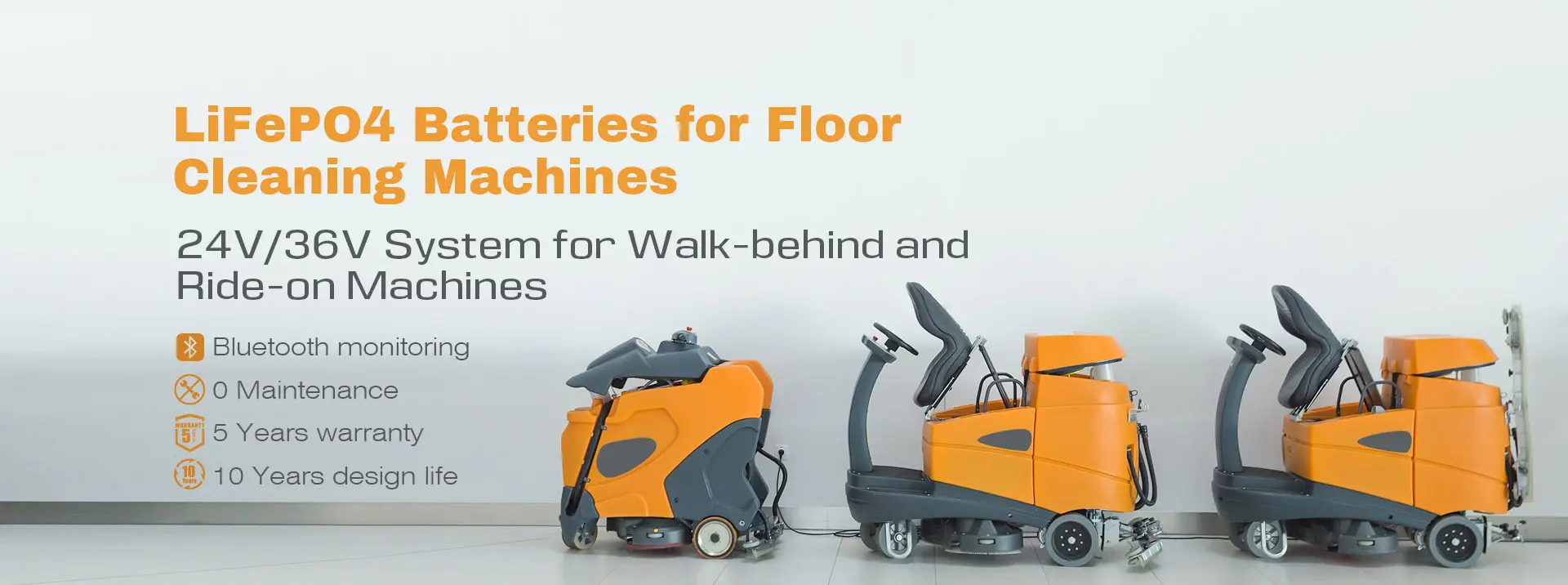
PROPOW’s Floor Scrubber Battery Solutions:
At PROPOW, we specialize in providing lithium-ion batteries that are built to last, designed for heavy-duty floor scrubbers and industrial cleaning equipment. Our PROPOW CPC36560 36V 560Ah LiFePO4 battery offers exceptional capacity, reliability, and long-term performance — reducing downtime and enhancing your equipment’s efficiency.
Why Choose PROPOW Batteries?
-
Longer Runtime: Our high-capacity batteries are designed to last longer, reducing the need for frequent charging and boosting productivity.
-
Sustainable Technology: With LiFePO4 chemistry, our batteries are not only environmentally friendly but also offer superior safety and stability.
-
Cost Savings: Thanks to fewer replacements and longer lifespan, PROPOW’s batteries provide a better return on investment over time.
-
Advanced Battery Management: Our BMS technology ensures the optimal functioning of each battery, giving you peace of mind with real-time monitoring and enhanced safety features.
About PROPOW:
PROPOW is a leader in high-quality lithium-ion batteries for commercial floor scrubbers and other industrial cleaning equipment. With years of expertise and cutting-edge technology, we provide customized, durable solutions that improve the efficiency and performance of your cleaning machines. We are committed to delivering exceptional products and support to help businesses optimize their cleaning operationsTo learn more about
how our products can transform your cleaning processes, visit our PROPOW website.
Post time: Mar-09-2026


